"CAVE CANEM" - JOHN FOU: Brussels
Past exhibition
Communiqué de presse
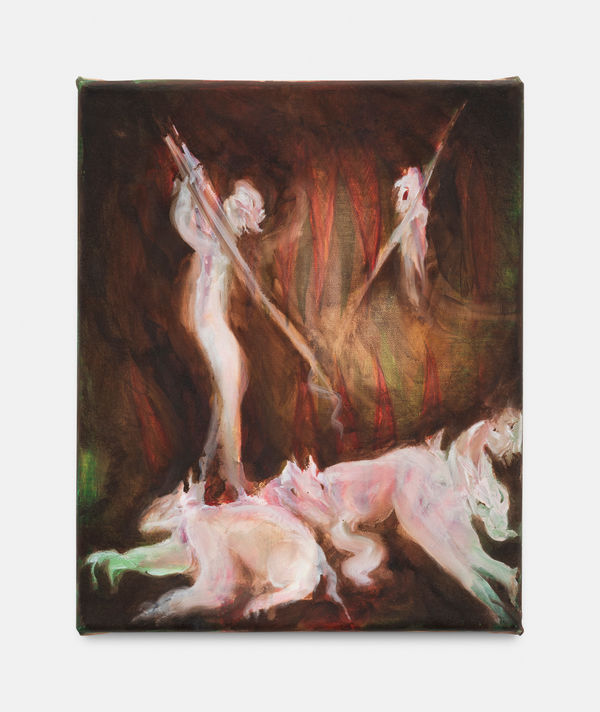
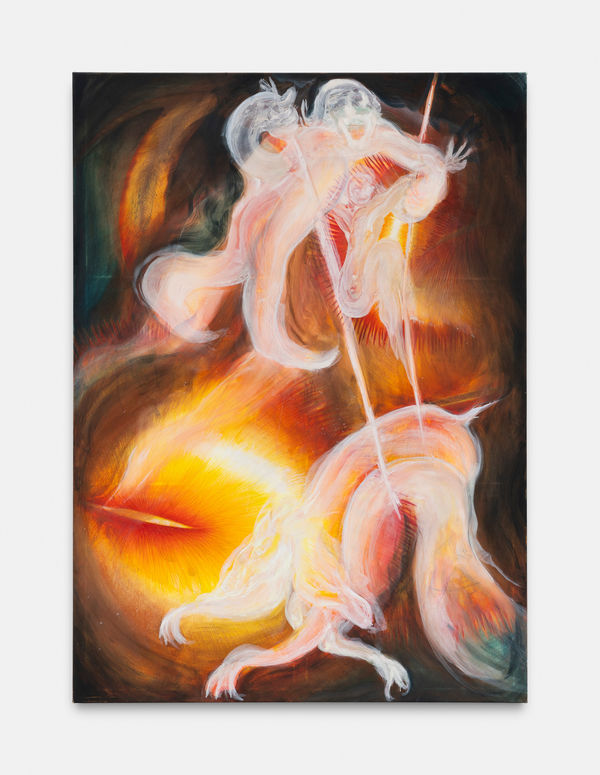
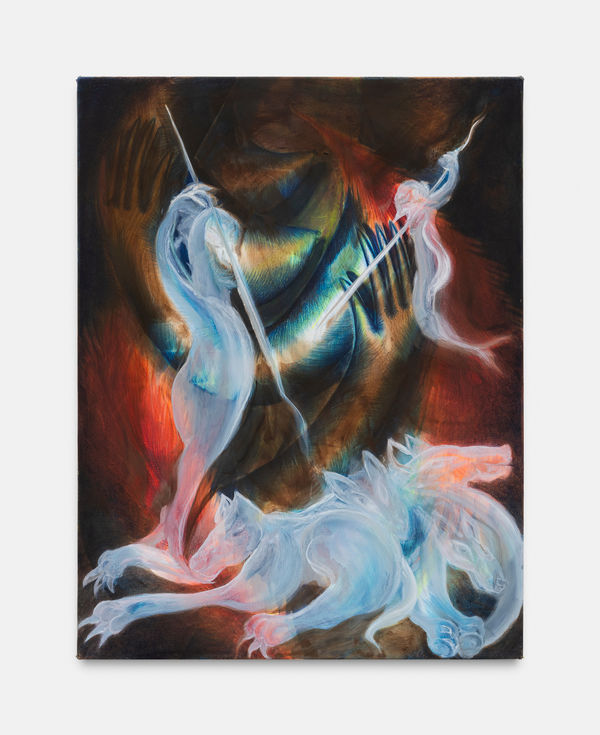
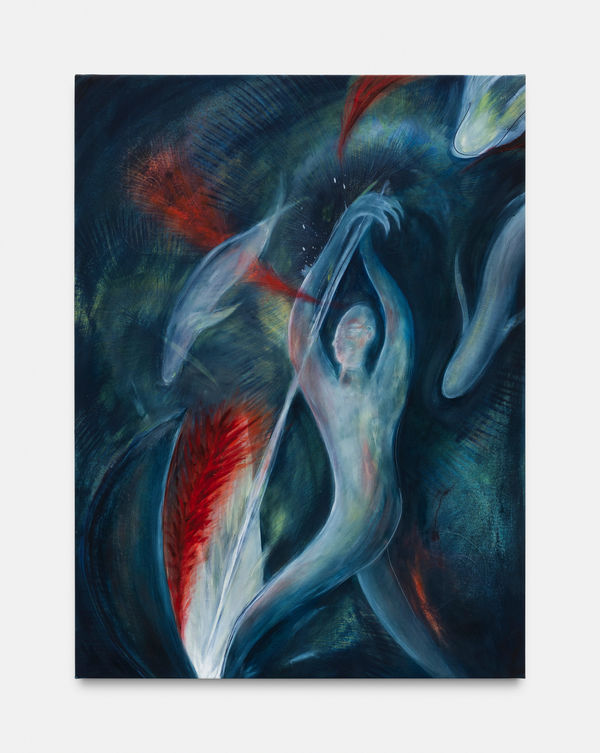
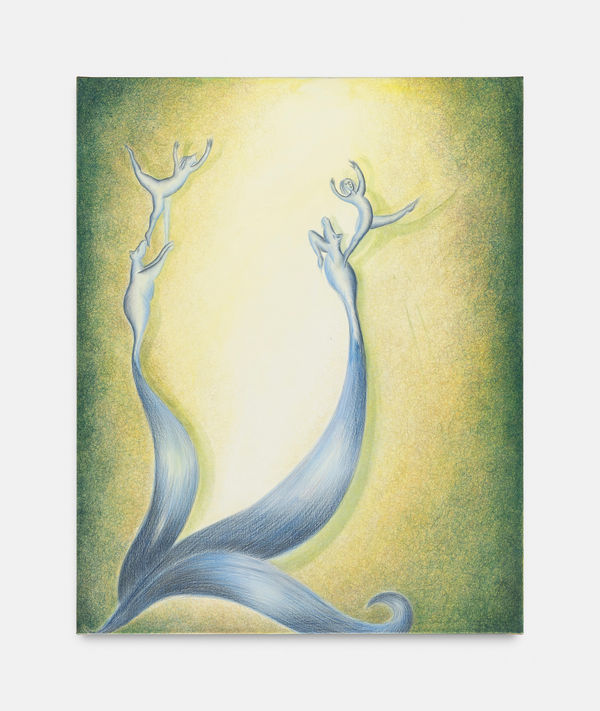
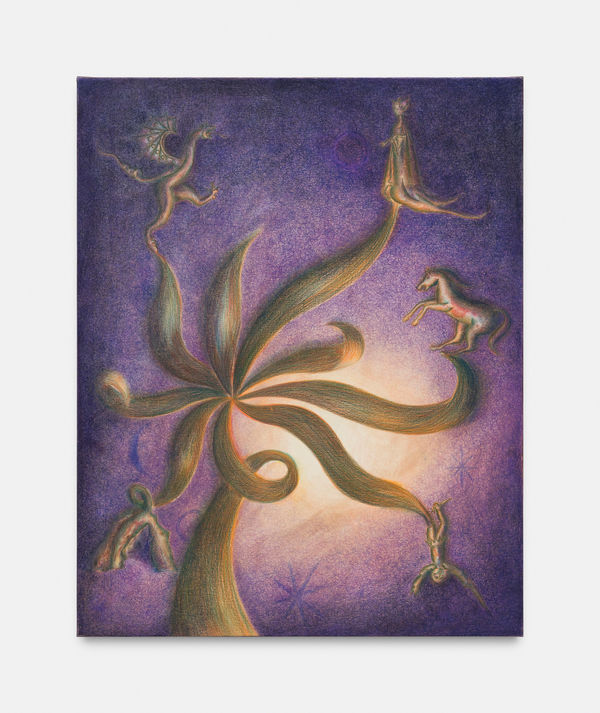
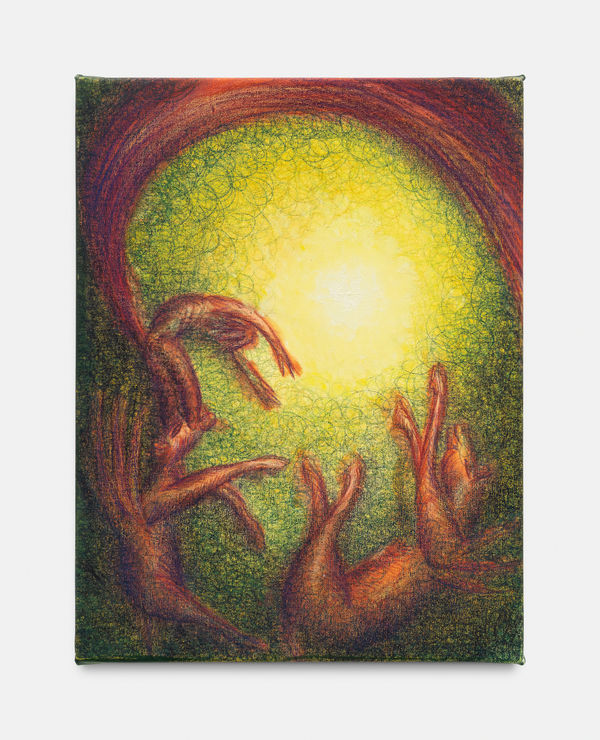
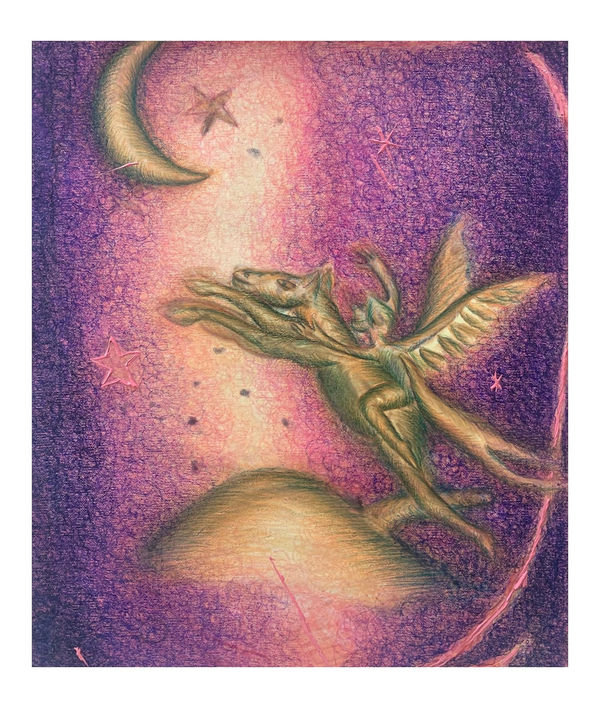
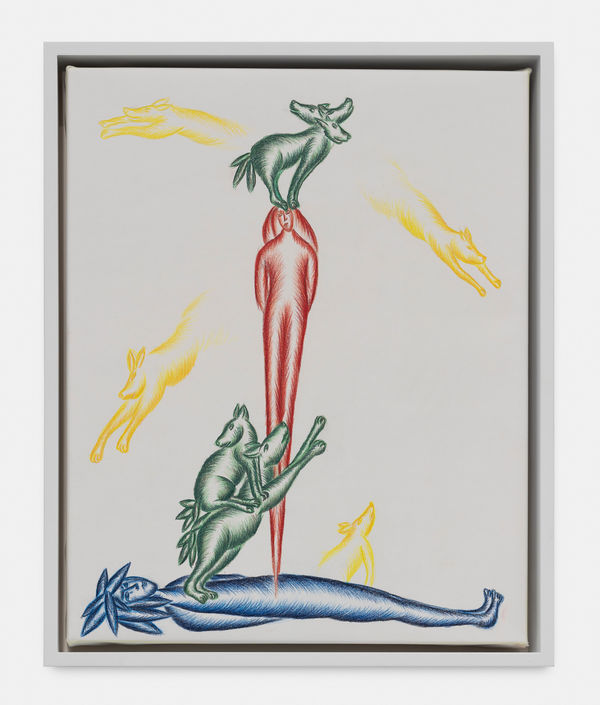
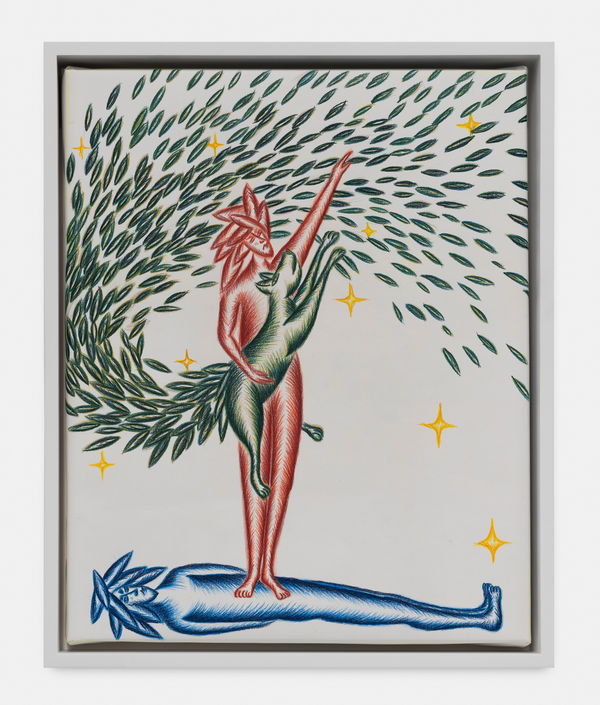
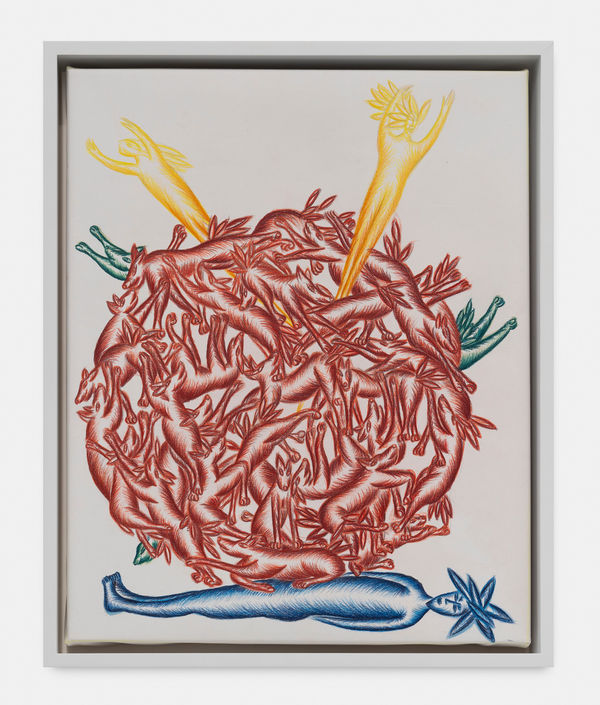
The title of the exhibition Cave Canem or Beware of the Dog originates from an exceptional Roman mosaic discovered almost intact in 1824 in Pompeii. This ancient work, placed at the entrance of the so-called “House of the Tragic Poet,” depicted a dark and menacing dog, serving as a warning to visitors. By reactivating this historical reference, John Fou creates a setup that reveals the omnipresence of myth and creature in his work. A sort of continuous exploration of the interconnection and tensions between human and animal, visible and invisible, the works, both alluring and unsettling, navigate between phantasmagoria and excess, close to what the Romantics referred to as “delightful horror.”
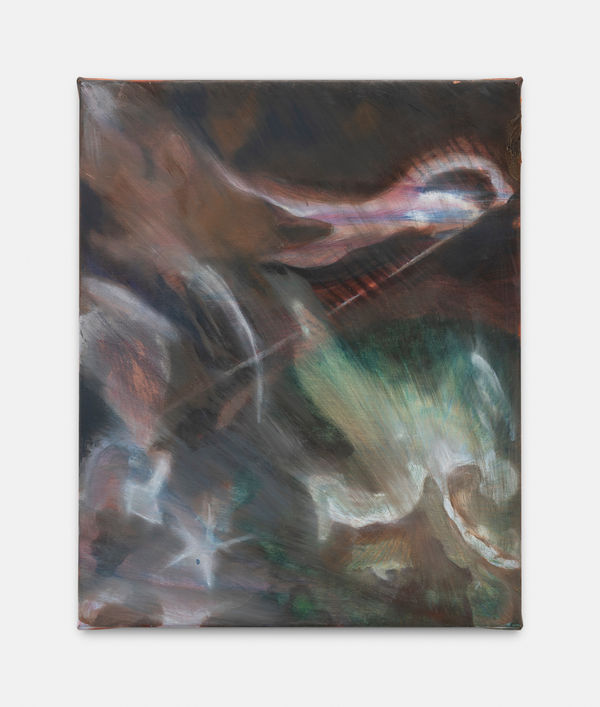
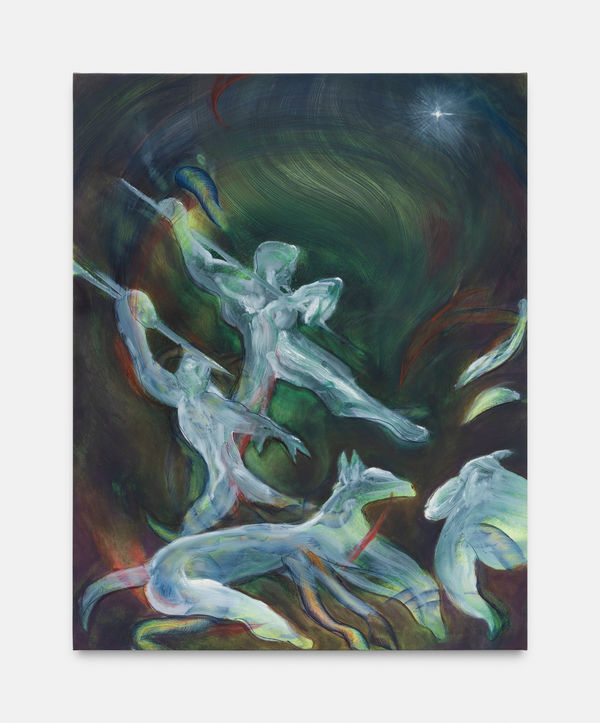
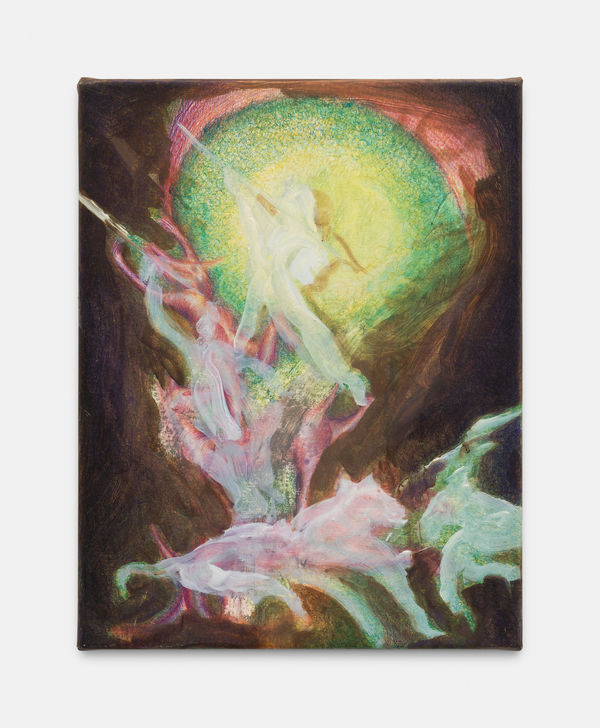
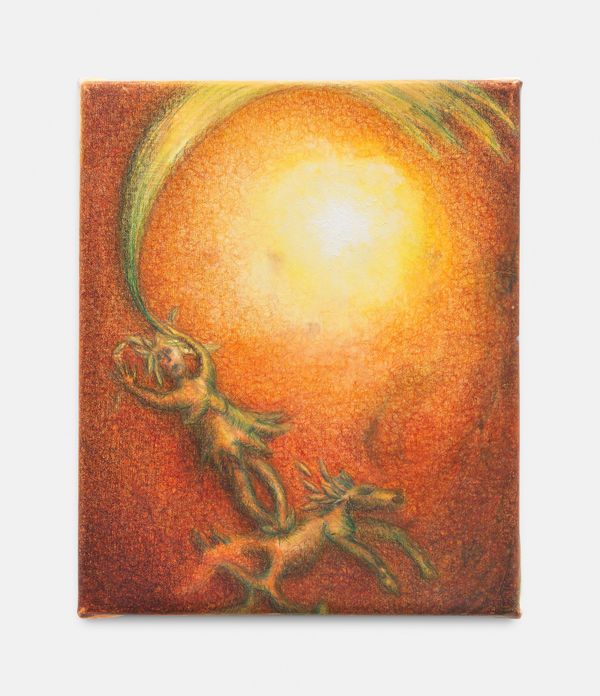
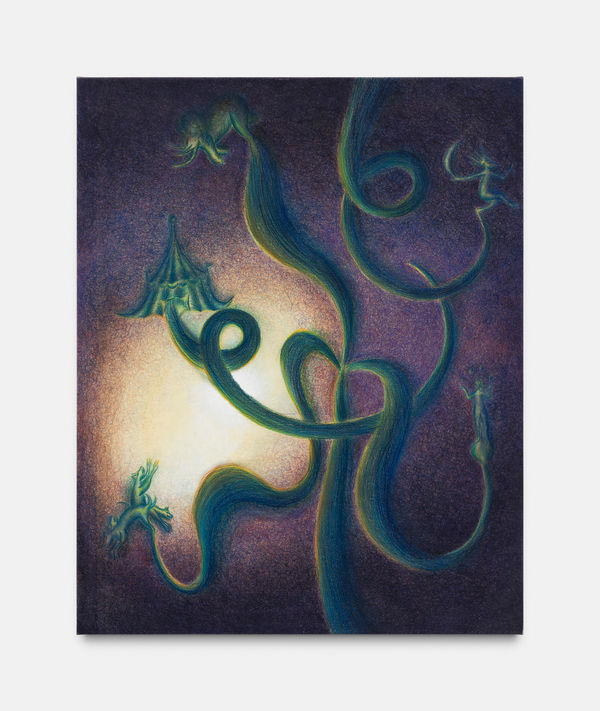
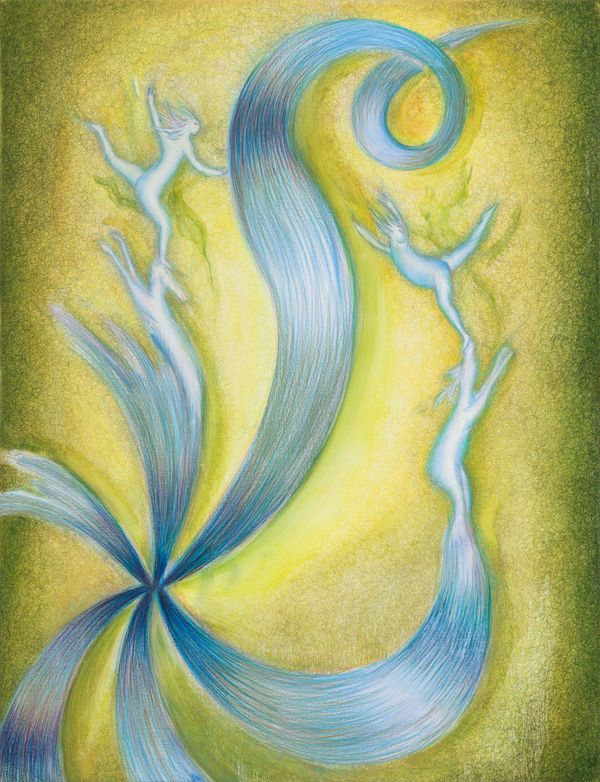
Through a layering of pencil and paint, the artist creates scenes where humans and non-humans emerge, fall, and dissolve into frozen backgrounds. In Goya’s famous engraving The Sleep of Reason Produces Monsters, dreams and nightmares blend, giving birth to creatures—bats and lynxes—that assail the artist’s sleeping mind. Similarly, in works like Lévitation, D’après Uccelo, or Un jour au cirque, which are unplaceable in time, beings wander in a sort of psychedelic dance, plunging us into a visual ritual, a shamanic dream without beginning or end, where forms evolve, change, and continuously contort. This process of perpetual transmutation gives each painting a unique dynamic, a space of incessant flow where the narrative logic is intentionally decentralized, if not suspended.
It is difficult to dissociate John Fou’s personal history as a former dancer and performer from the experience offered by this exhibition. In his most recent series, the artist orchestrates a true visual dramaturgy, akin to the “Mystery,” that medieval theater where miracles and devilries, up to and including danse macabre, were performed on the forecourts of religious buildings. Engaging the viewer in a choreography where shadows and lights meet, merge, and challenge each other, specially produced candles for each painting light up, drawing a nocturnal spectacle populated with subterranean voices.
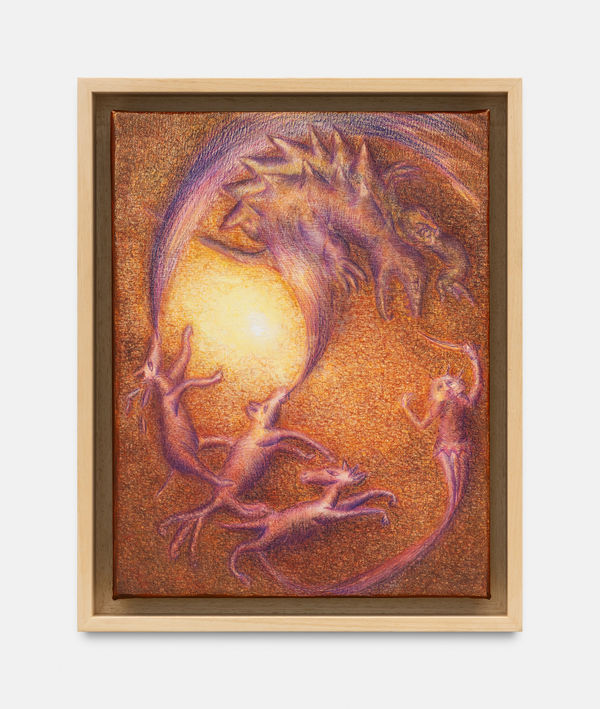
John Fou’s characters do not belong to this world; they are otherworldly figures, and his paintings resemble prophetic narratives, recalling the mystical treatises of William Blake. He delights in exploring morphological freedom through scenes of monster persecution—these marginalized beings, rejected by society, that Claude-Claire Kappler describes as figures expelled with the energy of despair. Imbued with a libertarian spirituality, the artist explores the mystical, mysterious, even esoteric dimensions of human existence. He undertakes a true teratological study of the soul, unfolding an imagined bestiary in scenes of hunts and battles that evoke the Gigantomachy or Dante’s Divine Comedy illustrated by Gustave Doré. A kind of dark poetry that questions man’s relations with the divine, while exposing the abuses of transcendent authority, Saturne closely evokes Blake’s The Ancient of Days. In this work, a burning yellow and orange background reveals the dominant figure of Europe holding a large compass. John’s almost toxic color magmas exalt archaic forces, reminiscent of alchemical processes where human and non-human figures become emanations of the same primordial energy.
Through this aesthetic of the fall, John awakens ancient voices and buried archetypes. He offers a reflection on origin and end, chaos and order, the limits of human understanding. Although the theme of combat and judgment is central to this series, it seems just as inseparable from the notion of sacrifice as theorized by Mauss and Huber. Here, combat is not simply a physical or mythological confrontation, but an initiatory rite, a sacred struggle where each blow dealt, each alteration suffered, symbolizes an act of sacrifice. The forms become increasingly ghostly, the lines dissolve, the planes collapse. In this spectral composition, the creature—whether monstrous, animal, or human—is sacrificed and then subjected to a metamorphosis that transcends its initial condition. This sacrifice, far from being a mere annihilation, becomes a hysteresis, a process of evolution whose outcome remains unknown but releases the vital forces that inhabit the painting.
Neither space nor time seems to have any hold; these uncertain worlds offer infinite possibilities where past and present, fantasies, nightmares, and specters constantly transform. In sum, the Cave Canem exhibition is a collection of surreal fragments, floating stories that invite the viewer to reflect on the hidden forces that govern the visible, a summoning of powers that, according to Walter Benjamin, render the aura of art immortal, despite the passage of time.
-- Barbara Lagié
Vues de l'exposition


Œuvres